

Executive committee
Carolina Rodríguez López
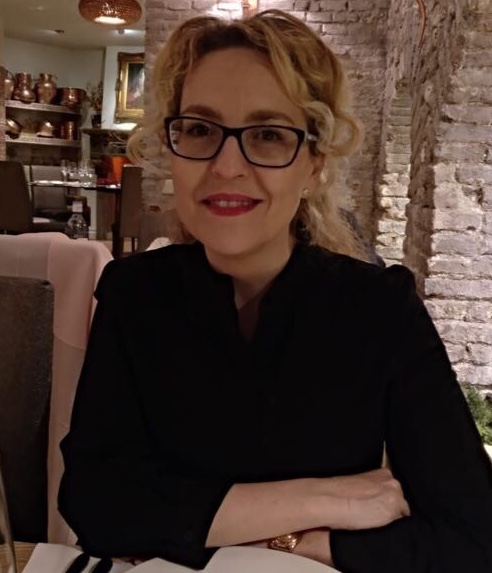
She earned a PhD with an Extraordinary Award from the Complutense University of Madrid (2001). Before joining its Department of Modern and Contemporary History in 2007, she was a postdoctoral fellow and contract researcher at Carlos III University of Madrid between 2001 and 2007. In addition to doctoral studies at the École d’Hautes Études in Paris (1999) and Sorbonne Université (2000), she was a Visiting Scholar at Harvard University (academic years 2009–2010 and 2010–2011) and California State University, Dominguez Hills (academic year 2015–2016), as well as a Guest Researcher at ZZF-Zentrum für Zeithistorische Forschung in Potsdam, Germany. She has attended conferences and seminars and delivered lectures in the United States, Argentina, France, Belgium, Portugal, the United Kingdom, Germany, the Netherlands, Italy and other countries. Her research focuses on the history of universities, exile, cultural transfers, historiography, tourism and emotions. Her work is reflected in numerous publications and presentations at national and international conferences. She directs the research group ‘Expehistoria: ideas, saberes y experiencias. Grupo de Historia sociocultural e intelectual’ and is Principal Investigator of the project ‘A Global Campus: Universities, cultural transfers and experiences in the 20th century.’
Gabriela Gomes
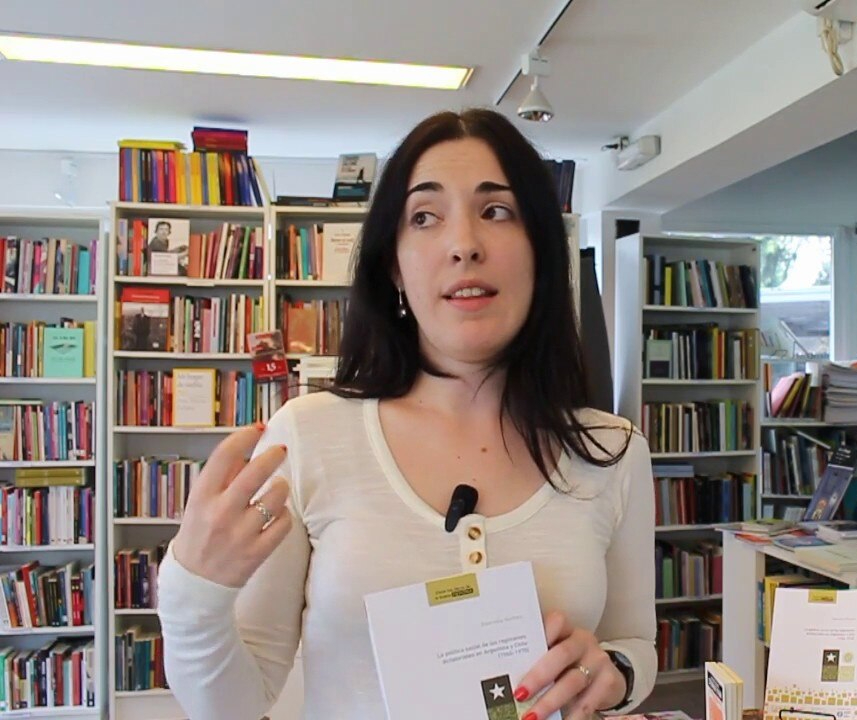
Professor of History at the University of Buenos Aires (UBA) and the National University of General Sarmiento (UNGS). She holds a PhD in History from UBA's Faculty of Philosophy and Letters and is a researcher with Argentina's National Scientific and Technical Research Council (CONICET). She investigates housing policies adopted by the dictatorial regimes of the Southern Cone, as well as young people and right-wing women who supported a corporatist political project in Argentina and Chile. She is the author of La política social de los regímenes dictatoriales en Argentina y Chile (1960-1970) (2016) and several articles on political history published in journals in Argentina, Brazil, Chile and France.
Joana Brites
Assistant Professor of Art History at the Faculty of Arts and Humanities of the University of Coimbra (UC), Integrated Researcher at UC's Centre for Interdisciplinary Twentieth-Century Studies (CEIS20), and collaborator in the ‘Art Theory, Historiography and Criticism’ research group at the Institute of Art History of NOVA University Lisbon. She holds a Master's degree in Art History and a PhD in History, specialising in Art History, from the University of Coimbra. She directed the Faculty's undergraduate Art History programme from 2015 to 2019 and co-coordinated CEIS20's transdisciplinary research strands from 2018 to 2020. She undertook teaching assignments in Spain, Italy and Romania and was a visiting researcher at Brown University, USA, in April 2019. Her research focuses on the relationship between fascism and modernism, with the architecture of the Portuguese Estado Novo as its main case study; artistic constraints under dictatorships; modern architecture, colonialism and development; contemporary sculpture; and dissonant heritage.
Marco Aurélio Vannucchi
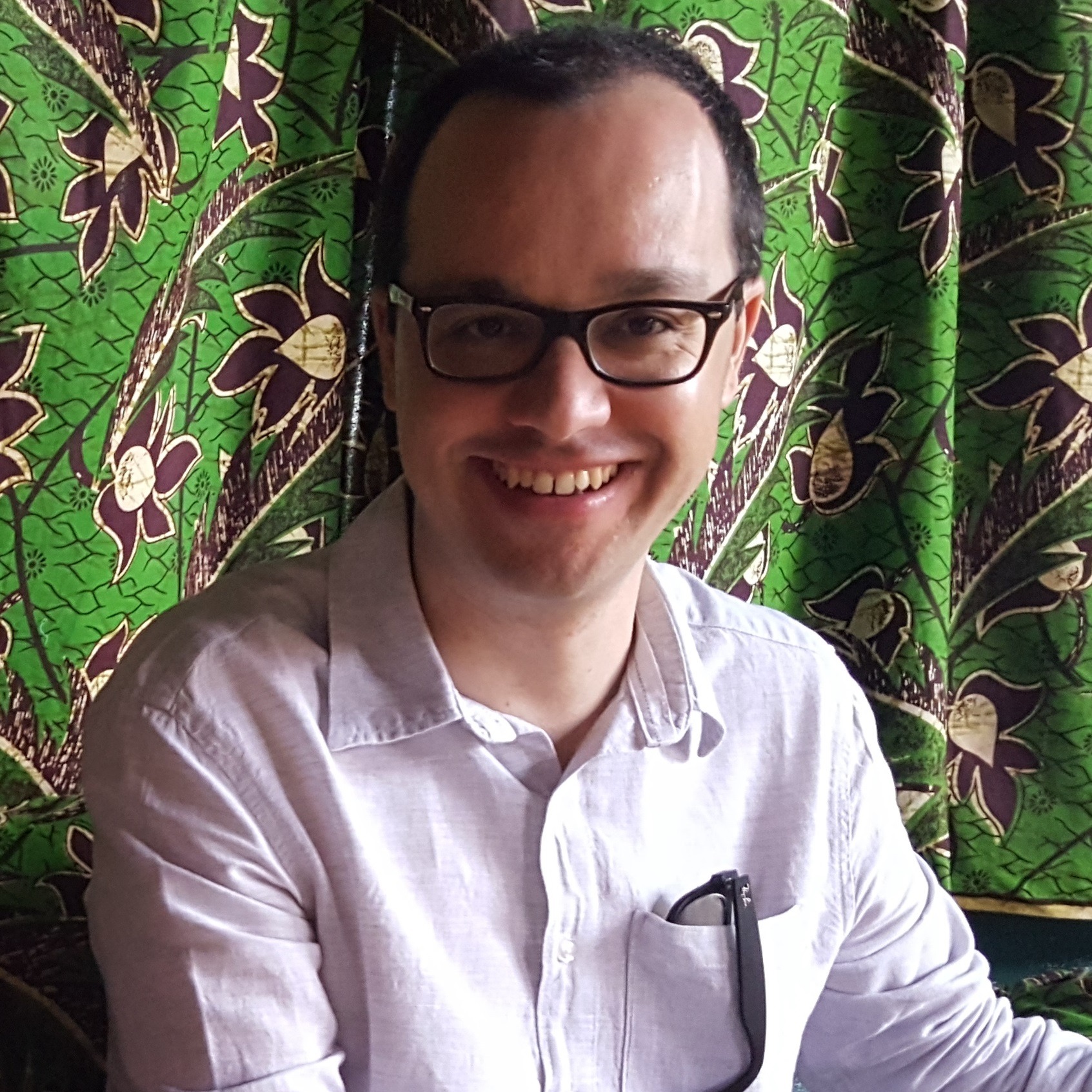
Professor at the School of Social Sciences of Fundação Getúlio Vargas (CPDOC-FGV). Coordinator of CPDOC-FGV's Graduate Programme in History, Politics and Cultural Assets (PPHPBC). Recipient of a CNPq Research Productivity Fellowship and a FAPERJ Scientist of Our State Fellowship. He held a fellowship from the National Library Foundation between 2018 and 2019, edited the journal Estudos Históricos between 2014 and 2018, and coordinated CPDOC-FGV's undergraduate History programme between 2014 and 2016. He holds Bachelor's and Master's degrees in History from the University of São Paulo (USP) and a PhD in History from the same institution, including a research period at Paris IV (Sorbonne). He completed postdoctoral research in Sociology at UNICAMP. His current research interests are corporatism, integralism, fascism and the middle classes.
Contato: Contato: marco.vannucchi@fgv.br | http://lattes.cnpq.br/9521159257671677
Maximiliano Fuentes Codera
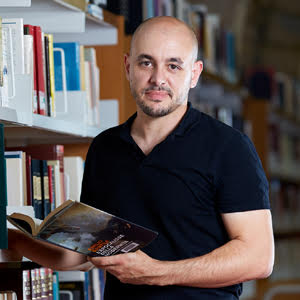
PhD in Contemporary History and professor at the University of Girona, where he also directs the Walter Benjamin Chair in Memory and Exile. He was a visiting researcher at the École des Hautes Études en Sciences Sociales, Freie Universität, Universidad Nacional de Tres de Febrero, University of Buenos Aires and Universidad Nacional de San Martín, and a visiting professor at the Università di Bologna. He has published more than fifty articles and book chapters on twentieth-century Spanish and European politics and culture. A substantial part of his publications addresses the First World War. He was Principal Investigator of the project ‘La patria hispana, la raza latina. Intelectuales, identidades colectivas y proyectos políticos entre España, Italia y Argentina (1880-1945)’, involving researchers from the United States, Argentina, Italy, Portugal and Spain. He is currently Principal Investigator of the international project ‘De la gripe de 1918 a la COVID-19: un análisis histórico en Europa y América Latina’, funded by the BBVA Foundation. His recent work includes editing the monograph Los intelectuales españoles frente a la Gran Guerra: Horizontes nacionales y europeos (Historia y Política, 2015, co-edited with Ángel Duarte) and the books España en la Primera Guerra Mundial. Una Movilización cultural (2014), A Civil War of Words. The cultural impact of the Great War in Catalonia, Spain, Europe and a glance to Latin America (2016, co-edited with Xavier Pla and Francesc Montero), Un viaje por los extremos. Eugenio d’Ors en la crisis del liberalismo (2017) and Ideas comprometidas. Los intelectuales y la política (2018, co-edited with Ferran Archilés). He is preparing a book titled Spain and Argentina in the First World War. Transnational Neutralities, to be published by Routledge and, in Spanish, by Marcial Pons.
Odilon Caldeira Neto

Assistant Professor of Contemporary History in the Department of History and the Graduate Programme in History at the Federal University of Juiz de Fora (UFJF). He holds a PhD in History from the Federal University of Rio Grande do Sul (UFRGS), including a doctoral research stay at the Institute of Social Sciences of the University of Lisbon (ICS-ULisboa). He coordinates the Laboratory of Political and Social History (LAHPS-UFJF) and the Observatory of the Far Right (UFJF). He is an Associate Researcher in the Working Group ‘Derechas contemporáneas: dictaduras y democracias’ (CLACSO) and the Right-Wing Movements, History and Memory Network. He authored Sob o Signo do Sigma: integralismo, neointegralismo e o antissemitismo (Eduem, 2014). His expertise is in Contemporary History and the History of the Present, with a focus on neofascisms, radical right-wing movements and far-right transnationalism. He is also interested in Digital History and Public History.